 Agentbox
Comparison
Vibe Kanban is sunsetting. Where to go next.
Vibe Kanban put a sunset notice above the screenshots in its own README, and 28,434 stars did not stop that happening. The repository is still unarchived, still Apache-2.0 and still clonable, so keeping the existing board is a real option. The maintained replacements are mostly a desktop app rather than the browser tab it used to be.
Written 16 October 2026. The stars and last-commit dates were read again from the GitHub API on 23 October 2026 UTC.
Which replacement to try, depending on what mattered
Agentbox and claudecodeui are the two that still open in a browser tab and install nothing. The largest community, at nearly four times Vibe Kanban's, belongs to Orca, which is the one to read about if never being abandoned again is the point.
Keeping Vibe Kanban is defensible too, an answer rather than a fallback, because the code did not stop working on the day the company did.
The company stopped, the code did not
The README carries the line "Vibe Kanban is sunsetting" and links straight to the announcement. That announcement went up on 10 April 2026. The reason it gives is that almost all users were on the free tier and no business model was found. The hosted side was switched off about a month later.
The repository is not archived, it is Apache-2.0, and its last commit was 19 September 2026. Nothing has been removed from GitHub or from npm.
The two commands that produced these numbers
$ gh api repos/BloopAI/vibe-kanban --jq '"\(.stargazers_count) stars, pushed \(.pushed_at[0:10]), archived \(.archived)"'
28384 stars, pushed 2026-09-19, archived false

$ curl -s https://raw.githubusercontent.com/BloopAI/vibe-kanban/main/README.md | head -3
The second command prints the sunset notice out of the README itself. Both calls were made on 17 October 2026.
Keeping Vibe Kanban running is a real option
Vibe Kanban is open source under Apache-2.0 with 28,434 stars behind it, and if it already does the job, nothing here argues against running it and forking it. Something like 28,000 other people are weighing the same question right now.
The question is who patches it the next time a coding agent changes its CLI, and every tool in this category drives those CLIs by shelling out to them.
Apache-2.0 means the fork and the patch are available to whoever wants them.
A replacement has to cover three things Vibe Kanban did
| What is lost | What it did | Who still does it |
|---|---|---|
| The board | Tasks in columns, moving as agents work | Emdash, Nimbalyst, Agentbox, grove |
| Agent execution | Each task handed to an agent in isolation | All of them |
| Being a local web app | A browser tab, nothing to install | Agentbox, claudecodeui, mulmoterminal |
Which boards for coding agents are still maintained
| Tool | Board | In a browser | Licence | Stars | Last commit |
|---|---|---|---|---|---|
| Orca | Workspaces | Desktop | MIT | 102,844 | 23 Oct 2026 |
| opcode | Sessions | Desktop | AGPL-3.0 | 22,409 | 18 Sep 2026 |
| Superset | Agent grid | macOS, iOS | Source-available | 15,312 | 23 Oct 2026 |
| claudecodeui | Sessions | Yes | AGPL-3.0 | 14,150 | 23 Oct 2026 |
| Emdash | Yes | Desktop | Apache-2.0 | 6,019 | 23 Oct 2026 |
| Nimbalyst | Yes | Desktop | MIT | 1,917 | 23 Oct 2026 |
| mulmoterminal | Terminal grid | Yes | MIT | 239 | 23 Oct 2026 |
| Agentbox | Board or inbox | Yes | GPL-3.0 | 78 | 23 Oct 2026 |
| grove | Kanban TUI | Terminal | MIT | 47 | 13 Oct 2026 |
| Vibe Kanban | Yes | Yes | Apache-2.0 | 28,434 | 19 Sep, sunsetting |
| Crystal | Sessions | Desktop | MIT | 3,132 | 26 Feb, deprecated |
Crystal appears on most lists of these tools and is dead, which its own description gives away by reading "Crystal is now Nimbalyst".
What mattered most about Vibe Kanban decides the replacement
Agentbox, and why a four-week-old project is a risk here
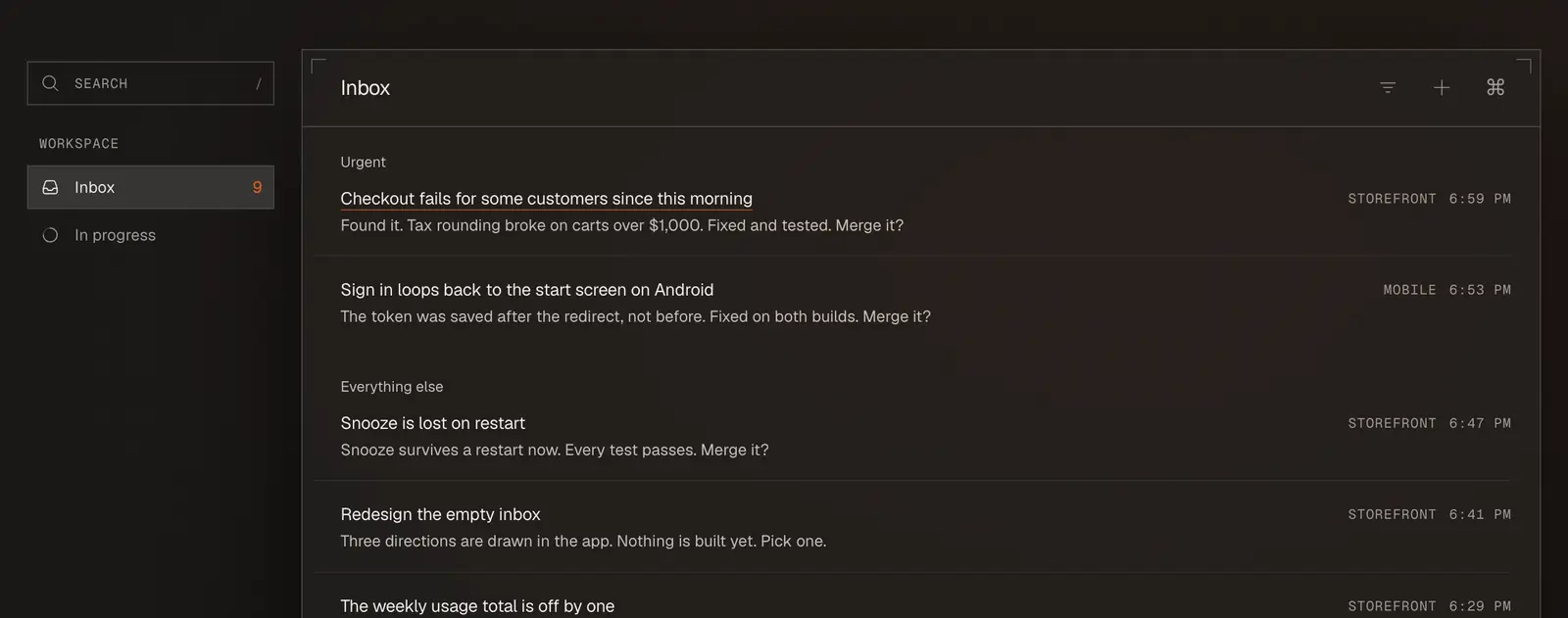
Every task gets its own git worktree, its own branch and its own agent, and finished work comes back as a row on a board or in an inbox to be answered, approved or closed. It runs Claude Code and Codex on an existing subscription, with no server and no account to make.
Agentbox is four weeks old and has 94 stars, against the 28,434 being left behind. It has not demonstrated longevity, and pretending otherwise would be insulting to someone arriving from a shutdown.
Agentbox is GPL-3.0 and runs on the local machine, so if Agentbox disappears the working copy stays where it is and every repository is untouched. Vibe Kanban's licence is doing exactly that for its users today, which is the strongest argument for staying put.
How to move to another tool, with the commands
There is no import, and Agentbox does not provide one. Both tools drive the same agents against the same repositories, so moving across is a matter of pointing the new tool at the same folder and filing again whichever tasks still matter.
Finish what is in flight first
$ git branch --no-merged main
  feature-x
  bugfix-y
Those are the unfinished agent branches, and they want merging or deleting before the switch, because two tools making worktrees in different places on one repository is how a branch goes missing without anybody noticing.
Start the new one on the same repository
$ npx agentbox-app
Agentbox is running at http://127.0.0.1:51734/?k=9f3c2a
Press Ctrl-C to stop.
It listens only on 127.0.0.1, the key in that URL changes on every run, and there is nothing hosted behind it, so it opens in the same browser tab Vibe Kanban used to open in.
Keep both for a week
Nothing stops the old board and the new one running side by side for a week, as long as the same task never goes to both of them at once.
How to judge a replacement so this does not repeat
The six checks below are the ones behind the table earlier on this page.
| Check | Why it matters | How to check it |
|---|---|---|
| Last commit | The single best signal of whether anyone is home | gh api repos/OWNER/REPO --jq .pushed_at |
| Licence | Decides whether a fork is possible when they leave | MIT, Apache and GPL all allow it. Source-available may not |
| Runs locally | A hosted side can be switched off. A laptop cannot | Does it work with the network off |
| Number of contributors | One person is one person's spare time | The contributors tab |
| Whether it owns the data | If the work lives in git, nothing is lost | Look for an export, or the absence of a database |
| Funding | Money buys longevity and also an incentive to charge | Their own about or pricing page |
Vibe Kanban passes four of those six today.
Questions people ask after the shutdown
Is Vibe Kanban dead?
Sunsetting rather than dead. The company stopped, the hosted side is off, and the repository is unarchived, with its last commit dated 19 September 2026. It can still be cloned, run locally and forked under Apache-2.0.
Can I still use it?
Yes, and Apache-2.0 means nobody can take it away. What comes with that is future breakage when the agent CLIs change, with nobody upstream to fix it.
Why did it shut down?
The announcement says almost all users were on the free tier and no business model was found. That description fits most of the table above, so the announcement is worth reading before picking a replacement.
Will my tasks transfer?
No, and there is less to transfer than it looks. The work lives in git branches, which no tool owns, so what is lost is the task list. For most people that is a dozen lines retyped in five minutes.
What is the closest thing to it?
For the board in a maintained desktop app, Emdash or Nimbalyst. For the local web app in a browser tab, Agentbox or claudecodeui, both of which open the same way Vibe Kanban did.
Is there a fork I should use?
Forks exist, as they always do after a shutdown. The last commit date and the number of contributors are what to look at, because a fork with one person on it is a smaller safety net than the original was. Whether it tracks upstream or has diverged matters too, since a diverged fork is a new project wearing a familiar name.
How do I avoid this happening again?
Nothing avoids it completely. What helps is preferring tools that run locally under a licence that permits a fork, and checking the last commit date before adopting anything. Twenty-three of them are listed with those dates.
Does the board actually matter, or is it habit?
A board earns its place when more work is queued than running and the queue needs seeing. If most tasks start immediately and come back within the hour, a list sorted by what needs attention is doing the same job with less ceremony. Agentbox ships both and switches between them with one key, which is the cheapest way to find out which one actually gets used.
What happens to the branches my agents already made?
They stay exactly where they are. Vibe Kanban created ordinary git branches and worktrees, and removing the tool removes neither. Before anything is uninstalled, git worktree list and git branch --no-merged main show what is still outstanding.
Does the replacement need an account?
Some do. Superset wants one, and Conductor does. Agentbox, claudecodeui and the terminal tools do not.
If the decision is to keep Vibe Kanban
Pin the version that works
$ git clone https://github.com/BloopAI/vibe-kanban.git
$ cd vibe-kanban && git log -1 --format='%H %cd'
$ git switch -c pinned d5cbb53   # the last commit on main, 19 Sep 2026
Working from a separate branch means no upstream change can arrive unannounced, and the patches that follow have somewhere to live.
Which part breaks first when the agent CLIs change
The board will keep working. What breaks is the layer underneath it that drives the coding agents, because Claude Code and Codex change their command-line behaviour regularly, which Agentbox chases in its own code, and nothing upstream is chasing those changes in Vibe Kanban now. The first symptom, when it arrives, is agents that fail to start.
Decide who fixes it
If somebody is willing to fix it, keeping it is a real plan. If the answer is nobody, keeping it means finding out when it breaks.
Watch for a maintained fork
Projects this size usually produce one. How many people are committing to it matters more than how many stars it collects in its first week.
What no board fixes, whichever one replaces it
Reviewing the work. Five finished columns mean five diffs that somebody still has to read, and moving the cards was always the easy part of that.
Writing the tasks. A vague card produces a vague branch, and a board makes it easier to create ten of them.
The plan's limits. No board changes what a subscription tier allows.
Free and open source says nothing about next year
The projects most likely to be here in a year are the ones where somebody is either funded or scratching their own itch, because a tool its author uses every day does not need a business model to survive.
Free products from companies need the most care, because a company needs revenue and a free tier is a decision somebody can reverse later. For every tool listed here, the work lives in git rather than in their database.
Where Agentbox loses
Agentbox has 94 stars against Orca's 102,844 and no native Windows build, where Emdash and Nimbalyst both ship one. No mobile app. No company. If longevity is the thing being optimised for after a shutdown, then the recommendation that comes out of that table is not Agentbox, and saying so here is better than leaving it to be discovered later.
Agentbox
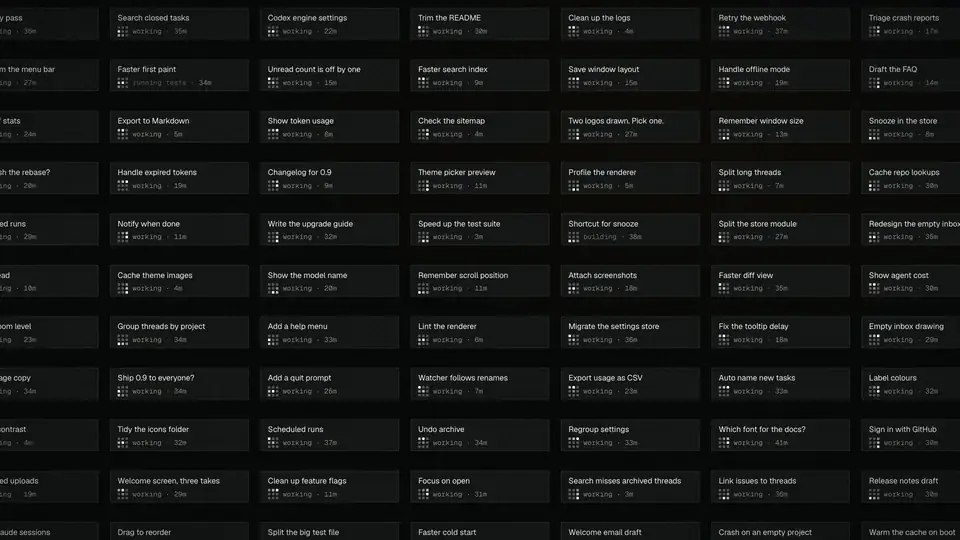
A board and an inbox for dozens of Claude Code and Codex agents, each one working in its own git worktree. It is free and open source, and it runs on the plan you already pay for.